

Save consistently. Invest for the long term. Live below your means. It's sound advice, and it's how most comfortable retirements get built.
But it has a side effect. After thirty or forty years of making the pile bigger, the pile becomes the point. You reach retirement with the savings you worked for and no clear idea how much of it you're actually allowed to use.
Picture a couple in their early 60s who did everything right. They've wanted a narrowboat for twenty years, and they've always filed it under "one day", something to revisit once they felt sure. Then they sit down with a proper plan and see the boat fits comfortably. Not in a decade. This year.
That isn't recklessness. It's permission, grounded in numbers.
Almost Nobody Knows Their Number
It's tempting to sort retirees into careful savers and big spenders. The data says both groups exist, and both are guessing.
The Institute for Fiscal Studies (IFS, April 2025) looked at defined contribution pension pots worth £250,000 or more that were paying out regular withdrawals. In 2023–24, 26% were being drawn at under 2% a year, and a further 30% at 2–4%. More than half of the largest pots were being drawn slowly.
The IFS notes some of that likely reflected the inheritance tax advantages pensions have enjoyed, advantages that are being withdrawn. Some of it is likely simple uncertainty.
So the problem is under-spending? Not quite.
The Financial Conduct Authority's Retirement Income Market Data for 2025/26 shows the opposite pattern. 320,762 pension plans were drawn at 8% a year or more, 46% of all plans with regular withdrawals. Among 55–64-year-olds making regular withdrawals, half were drawing at 8% or more.
Put those side by side and the real issue is clear. Some people are drawing a fraction of what their savings could support. Others are drawing faster than their pots may be able to sustain.
The question isn't whether you're a saver or a spender. It's whether you know your sustainable number. Almost nobody does.
The Third Question a Plan Should Answer
Most retirement planning starts with two questions. Can I retire? And how do I pay less tax doing it?
Both matter. Optiml UK is being built to answer both, modelling your pensions, ISAs (Individual Savings Accounts) and State Pension together and sequencing which pots to draw, and when, to lower your lifetime tax bill.
But we're building it around a third question too. How much can you safely spend, and on what?
Of everything a plan can tell you, that's the answer I care about most. Not "you can retire." Not "you'll pay less tax." It's "you can spend more than you thought." Or, when that isn't true yet, exactly what would make it true.
That's the job of the Maximise Retirement Spending strategy we're building for the UK. Instead of leaning on a rule of thumb, it's designed to work out the highest level of spending your whole plan can support, across your pots, your State Pension and your tax position.
Modelling the Boat
Consider Linda and Graham, both 62, recently retired and living in England. They own their home outright. This is what they're working with.
- £450,000 across their pensions, split evenly between them
- £60,000 in a Stocks and Shares ISA
- Both on track for the full new State Pension from 67, currently £241.30 a week (about £12,548 a year each in 2026/27)
- A spending budget of £28,000 a year, chosen because they're unsure what's safe
The boat they want is a secondhand narrowboat at £25,000, plus an assumed £3,500 a year for mooring, licence, insurance and upkeep.
This is a simplified worked example, not output from Optiml. The UK platform is being built to run this properly on your own numbers. The point here is to show the shape of the answer.
The assumptions
- A 2% a year return after inflation and charges, held steady. Real markets won't be, and investments can fall as well as rise.
- Everything in today's money, with the State Pension and 2026/27 tax bands held flat in real terms.
- 25% of each pension withdrawal taken tax-free, the rest taxed as income using England, Wales and Northern Ireland bands (rates differ in Scotland).
- Ongoing withdrawals taxed as if they all come from the pensions, which errs on the cautious side.
- Spending held level from 62 to age 95.
- The home isn't counted. It sits outside the calculation as a backstop.
What their £28,000 budget actually does
Before State Pension age, each of them can draw about £16,760 a year from their pension with no income tax to pay. A quarter is tax-free and the rest fits inside their £12,570 Personal Allowance.
Together that's £33,520 a year. Their £28,000 budget carries no income tax at all for five years.
From 67, their State Pensions cover about £25,100 of the £28,000. The pots barely need touching.
On these assumptions, the modelled plan reaches 95 with roughly £600,000 still unspent, in today's money. That's more than they started with.
That money could still be passed on. But it was never a deliberate choice. It's simply what caution left behind.
Testing the boat
Now add the boat. £25,000 comes out of the ISA in year one, and their annual spending rises to £31,500 to cover running costs for the whole horizon.
With the boat bought and kept, the modelled plan still reaches 95 with around £355,000 unspent. The sustainable spending level only moves from about £38,600 to about £37,700 a year.
In other words, the boat and its running costs fit inside room they already had, with more than £6,000 a year to spare.
Where the money comes from matters too. An extra £25,000 drawn from the pension in one year would push much of it into taxable income for that year. ISA withdrawals are tax-free.
When the answer is "not yet"
Now shrink their pensions to £250,000 and keep everything else the same. On the same assumptions, the sustainable level drops to about £31,700 a year, and the boat plus its running costs overshoots it by roughly £650 a year.
That's not a no. It's a gap with a size, and a plan shows the ways to close it.
- Trim about £650 a year from other regular spending
- Buy the boat in two years, which cuts the trim needed to under £400 a year
- Keep the purchase in the ISA rather than the pension, so it never adds to taxable income
- Look at a cheaper boat or lower running costs
Sometimes the gap is bigger and the honest answer is wait. Either way, the dream becomes a decision with a number attached.
Flat returns are also the friendly version. Real markets move, and a poor run early in retirement does more damage than the same run later, which is the sequence-of-returns risk we cover in a separate post. That's why the boat should be tested against many market paths, not one. When Optiml launches in the UK, its Success Score will stress-test a plan against up to 50 market scenarios, and Compare Plans will put "boat" and "no boat" side by side.
The April 2027 Question
"Leave it in the pension, just in case" has been a sensible default for years, partly because pensions sat outside the estate for Inheritance Tax (IHT). From 6 April 2027, most unused defined contribution pots will count towards the estate, with IHT at 40% on value above the available nil-rate bands. That doesn't mean spend it all. It means the default is worth re-examining with real numbers, weighing what you'll use against what you want to pass on. Our post on the April 2027 pension inheritance tax change covers the detail.
The Point of the Pile
Saving got you here. Decades of living below your means is the reason the boat is even a question, and spending some of it now doesn't undo any of that.
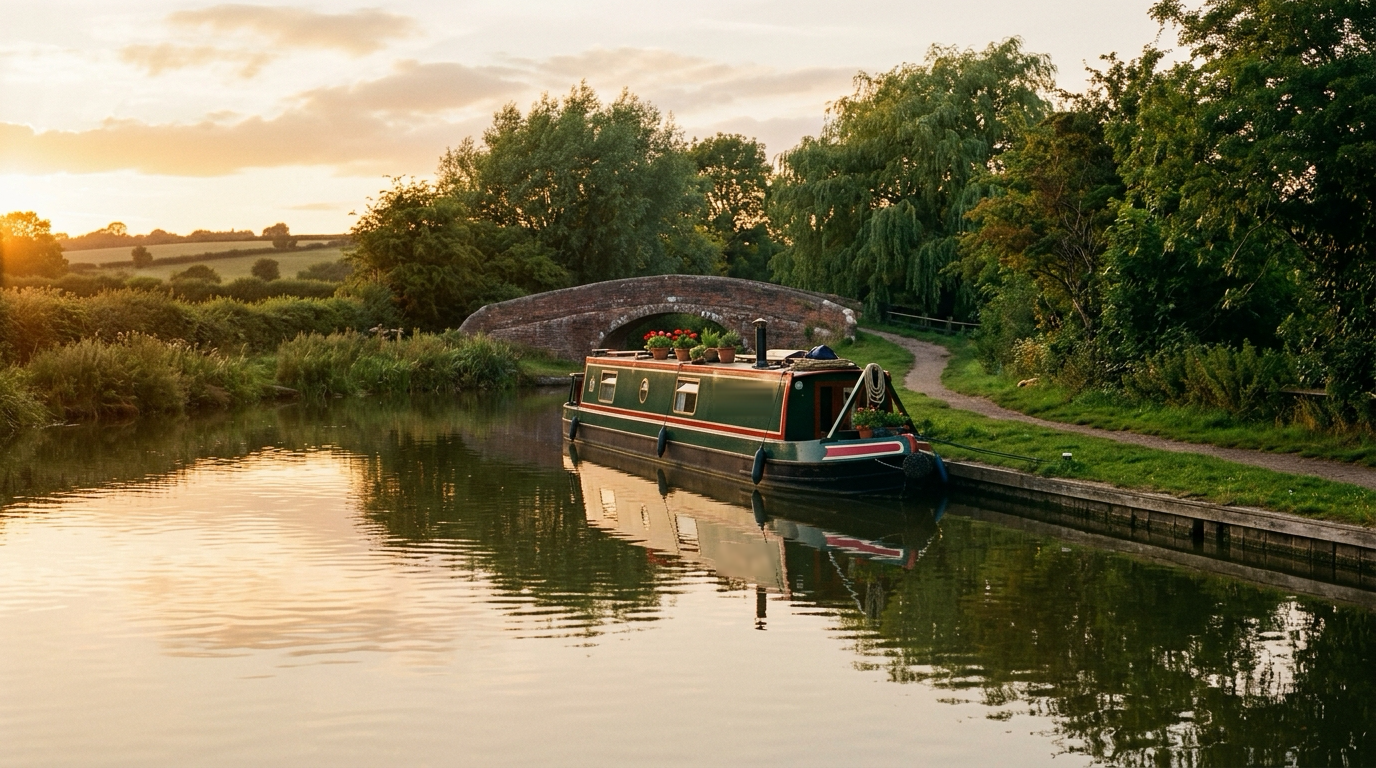
But the pile was always meant to become something. The trip you kept postponing. Time with the people you love. A boat on a quiet canal in your active years, while you can still enjoy it.
A plan's job is to turn "I assume I shouldn't" into an actual answer. Sometimes that answer is "not yet, and here's how." For many who've saved well, it's "you can spend more than you thought."
Optiml is coming to the UK, and this is the question it's being built to answer. It's not about how big the pile gets. It's about what it lets you do.
If the numbers say you can, buy the boat.